
andreavolpato/spektrafilm
Spectral simulation of analog photography processes
Build with Backblaze B2
SDKs, agent skills, IDE extensions, and reference pipelines from Backblaze Labs. All open source.
Loading star history...
Where it stands
Rank, growth pace and release cadence relative to everything GStars tracks.
No releases in the last 90 days; the most recent was 150 days ago, with 9 contributors on GitHub.
Use Cases & Benefits
- Simulates analog photographic film, print, and scan processes using spectral data and physically based models.
- Provides a scientifically grounded, end-to-end spectral simulation that predicts real-world photographic material behavior.
- Use for researching and developing accurate film emulation pipelines based on manufacturer spectral data.
- Use for creating interactive desktop simulations to explore film characteristics like grain, halation, and couplers.
- Use for generating LUT bundles to integrate spectral film simulations into color grading and image processing workflows.
Should you depend on it?
License terms, project hygiene and risks, from GitHub metadata and GStars' snapshots.
License
GPL 3.0
Copyleft: distributing software that includes it generally requires releasing your source under the same license.
Community files
- README: present
Watch-outs
- GPL-style copyleft: including it in distributed software generally requires releasing your source under the same license.
General guidance from repository metadata, not legal advice. How we score
From the README
An exploration of how to make good use of spectroscopic data from manufacturer datasheets in an end-to-end, physically based model with spectral calculations, with the goal of turning that data into convincing film, print, and scan renderings that can be explored interactively.
Here are some useful links and spin-off projects:
In practice, this Python repository is the reference implementation for other developments, and the place where I am growing the underlying model. It lets you start from a camera image, pass it through a virtual negative, print, and scan pipeline, and inspect how film-stock data, couplers, enlarger settings, grain, halation, and other photographic effects shape the final result. The aim is not just to imitate a generic "film look," but to build a model that is grounded in measurements and predicts real-world behaviors of photographic materials.
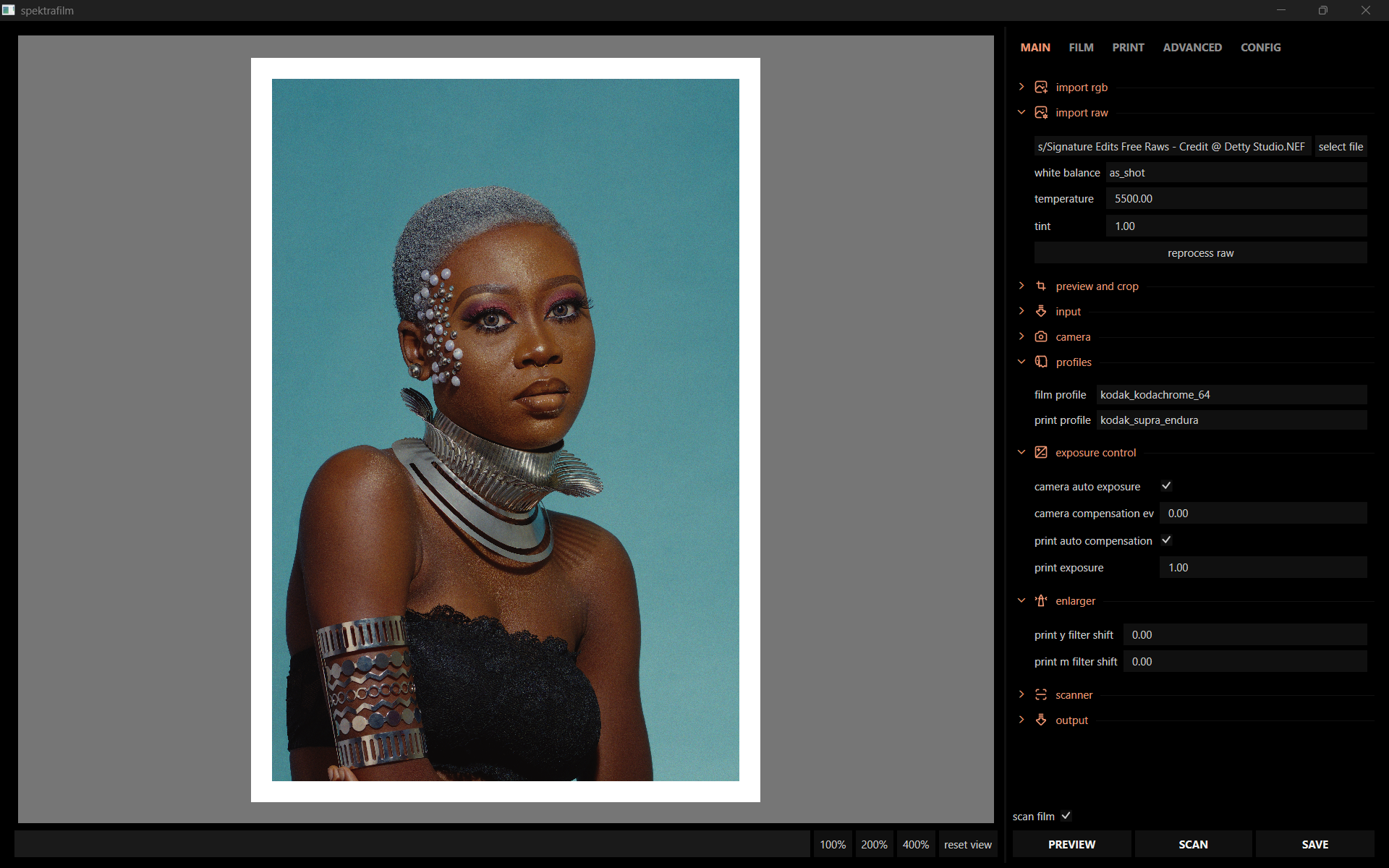
The desktop GUI exposes the Python tech-demo functionality without writing code, letting you import RAW files or prepared linear images, explore different film and paper profiles, adjust the simulation interactively, and move quickly between fast(-ish) previews and more detailed final scans. Full resolution export is very slow at the moment.
Daily snapshots
Stars gained per day, and how forks and open issues moved, from GStars' daily snapshots
Forks
254+52
Open issues
27+7
Compared with peers in Backend
Fastest-growing repositories GStars tracks in this cohort for the week of Nov 1, by 7-day star growth
| Repository | Stars | +7d | Health | Last release |
|---|---|---|---|---|
| anthropics/skills | 187.8K | +2.9K | 15 | — |
| DuarteSantos8/openGym | 19.7K | +2.4K | 60 | 2 days ago |
| shiyu-coder/Kronos | 47.0K | +2.3K | 16 | — |
| NationalSecurityAgency/ghidra | 98.2K | +2.3K | 64 | 14 days ago |
| microsoft/VibeVoice | 56.0K | +1.1K | 29 | — |
| andreavolpato/spektrafilm | 1.8K | — | 22 | 150 days ago |
| Category median | 56.0K | +2.3K | 29 | — |
Discover Repositories
Search across tracked repositories by name or description