
sinaptik-ai/pandas-ai
Chat with your database or your datalake (SQL, CSV, parquet). PandasAI makes data analysis conversational using LLMs and RAG.
Backblaze Generative Media Hackathon
Build the next generation of AI media apps with Genblaze, stored on Backblaze B2. $10,000 in prizes.
Loading star history...
Use Cases & Benefits
- Enables conversational data analysis by querying databases and data files using natural language and large language models.
- Simplifies data interaction for both technical and non-technical users by converting natural language questions into data operations and visualizations.
- Use for quickly exploring and summarizing data in Jupyter notebooks without writing complex code.
- Use for integrating conversational data querying in Streamlit apps to enhance user experience with natural language inputs.
- Use for securely executing data queries in isolated Docker sandboxes to mitigate risks from untrusted inputs.
About pandas-ai






PandasAI is a Python platform that makes it easy to ask questions to your data in natural language. It helps non-technical users to interact with their data in a more natural way, and it helps technical users to save time, and effort when working with data.
🔧 Getting started
You can find the full documentation for PandasAI here.
You can either decide to use PandasAI in your Jupyter notebooks, Streamlit apps, or use the client and server architecture from the repo.
📚 Using the library
Python Requirements
Python version 3.8+ <3.12
📦 Installation
You can install the PandasAI library using pip or poetry.
With pip:
pip install "pandasai>=3.0.0b2"
With poetry:
poetry add "pandasai>=3.0.0b2"
💻 Usage
Ask questions
import pandasai as pai
from pandasai_openai.openai import OpenAI

llm = OpenAI("OPEN_AI_API_KEY")

pai.config.set({
    "llm": llm
})

# Sample DataFrame
df = pai.DataFrame({
    "country": ["United States", "United Kingdom", "France", "Germany", "Italy", "Spain", "Canada", "Australia", "Japan", "China"],
    "revenue": [5000, 3200, 2900, 4100, 2300, 2100, 2500, 2600, 4500, 7000]
})

df.chat('Which are the top 5 countries by sales?')
China, United States, Japan, Germany, Australia
Or you can ask more complex questions:
df.chat(
    "What is the total sales for the top 3 countries by sales?"
)
The total sales for the top 3 countries by sales is 16500.
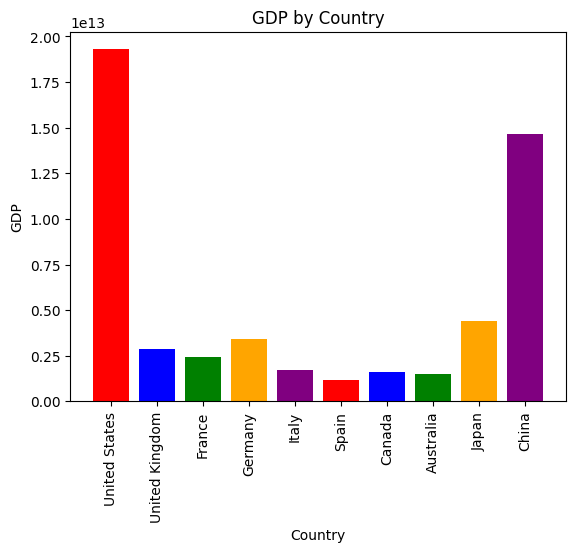
Visualize charts
You can also ask PandasAI to generate charts for you:
df.chat(
    "Plot the histogram of countries showing for each one the gd. Use different colors for each bar",
)
Multiple DataFrames
You can also pass in multiple dataframes to PandasAI and ask questions relating them.
import pandasai as pai
from pandasai_openai.openai import OpenAI

employees_data = {
    'EmployeeID': [1, 2, 3, 4, 5],
    'Name': ['John', 'Emma', 'Liam', 'Olivia', 'William'],
    'Department': ['HR', 'Sales', 'IT', 'Marketing', 'Finance']
}

salaries_data = {
    'EmployeeID': [1, 2, 3, 4, 5],
    'Salary': [5000, 6000, 4500, 7000, 5500]
}

llm = OpenAI("OPEN_AI_API_KEY")

pai.config.set({
    "llm": llm
})

employees_df = pai.DataFrame(employees_data)
salaries_df = pai.DataFrame(salaries_data)


pai.chat("Who gets paid the most?", employees_df, salaries_df)
Olivia gets paid the most.
Docker Sandbox
You can run PandasAI in a Docker sandbox, providing a secure, isolated environment to execute code safely and mitigate the risk of malicious attacks.
Python Requirements
pip install "pandasai-docker"
Usage
import pandasai as pai
from pandasai_docker import DockerSandbox
from pandasai_openai.openai import OpenAI

# Initialize the sandbox
sandbox = DockerSandbox()
sandbox.start()

employees_data = {
    'EmployeeID': [1, 2, 3, 4, 5],
    'Name': ['John', 'Emma', 'Liam', 'Olivia', 'William'],
    'Department': ['HR', 'Sales', 'IT', 'Marketing', 'Finance']
}

salaries_data = {
    'EmployeeID': [1, 2, 3, 4, 5],
    'Salary': [5000, 6000, 4500, 7000, 5500]
}

llm = OpenAI("OPEN_AI_API_KEY")

pai.config.set({
    "llm": llm
})

employees_df = pai.DataFrame(employees_data)
salaries_df = pai.DataFrame(salaries_data)

pai.chat("Who gets paid the most?", employees_df, salaries_df, sandbox=sandbox)

# Don't forget to stop the sandbox when done
sandbox.stop()
Olivia gets paid the most.
You can find more examples in the examples directory.
📜 License
PandasAI is available under the MIT expat license, except for the pandasai/ee directory of this repository, which has its license here.
If you are interested in managed PandasAI Cloud or self-hosted Enterprise Offering, contact us.
Resources
Beta Notice
Release v3 is currently in beta. The following documentation and examples reflect the features and functionality in progress and may change before the final release.
- Docs for comprehensive documentation
- Examples for example notebooks
- Discord for discussion with the community and PandasAI team
🤝 Contributing
Contributions are welcome! Please check the outstanding issues and feel free to open a pull request. For more information, please check out the contributing guidelines.
Thank you!
Discover Repositories
Search across tracked repositories by name or description