
rohitg00/ai-engineering-from-scratch
Learn it. Build it. Ship it for others.
Build with Backblaze B2
SDKs, agent skills, IDE extensions, and reference pipelines from Backblaze Labs. All open source.
Loading star history...
Use Cases & Benefits
- Provides a comprehensive, from-scratch AI engineering curriculum covering math, machine learning, deep learning, NLP, computer vision, agents, and production systems.
- Delivers a linear, hands-on learning path with 503 lessons and 20 phases, building AI concepts from raw math to deployable artifacts in multiple languages.
- Use for mastering foundational AI math and algorithms by implementing them manually before using frameworks like PyTorch or JAX.
- Use for developing practical skills in building and deploying autonomous AI agents and multi-agent systems with reusable code and prompts.
- Use for educators and learners seeking a structured, open-source AI course that bridges theory and production with real coding projects.
About ai-engineering-from-scratch



From the creator of Agent Memory - #1 Persistent memory ⭐  which naturally works with any agents or chat assistants.
░░░▒▒▒░░░▒▒▒░░░▒▒▒░░░▒▒▒░░░▒▒▒░░░▒▒▒░░░▒▒▒░░░▒▒▒░░░▒▒▒░░░▒▒▒░░░▒▒▒░░░▒▒▒░░░▒▒▒░░░▒▒▒░░░▒▒▒
84% of students already use AI tools. Only 18% feel prepared to use them professionally. This curriculum closes that gap.
503 lessons. 20 phases. ~320 hours. Python, TypeScript, Rust, Julia. Every lesson ships a reusable artifact: a prompt, a skill, an agent, an MCP server. Free, open source, MIT.
You don't just learn AI. You build it. End-to-end. By hand.
150,639 readers · 241,669 page views in the last 30 days · as of 2026-06-07
How this works
Most AI material teaches in scattered pieces. A paper here, a fine-tuning post there, a flashy agent demo somewhere else. The pieces rarely line up. You ship a chatbot but can't explain its loss curve. You hook a function to an agent but can't say what attention does inside the model that's calling it.
This curriculum is the spine. 20 phases, 503 lessons, four languages: Python, TypeScript, Rust, Julia. Linear algebra at one end, autonomous swarms at the other. Every algorithm gets built from raw math first. Backprop. Tokenizer. Attention. Agent loop. By the time PyTorch shows up, you already know what it's doing under the hood.
Each lesson runs the same loop: read the problem, derive the math, write the code, run the test, keep the artifact. No five-minute videos, no copy-paste deploys, no hand-holding. Free, open source, and built to run on your own laptop.
░░░▒▒▒░░░▒▒▒░░░▒▒▒░░░▒▒▒░░░▒▒▒░░░▒▒▒░░░▒▒▒░░░▒▒▒░░░▒▒▒░░░▒▒▒░░░▒▒▒░░░▒▒▒░░░▒▒▒░░░▒▒▒░░░▒▒▒
The shape of the curriculum
Twenty phases stack on top of each other. Math is the floor. Agents and production are the roof. Skip ahead if you already know the lower layers, but don't skip and then wonder why something at the top is breaking.
%%{init: {'theme':'base','themeVariables':{'primaryColor':'#fafaf5','primaryTextColor':'#1a1a1a','primaryBorderColor':'#3553ff','lineColor':'#3553ff','fontFamily':'JetBrains Mono','fontSize':'12px'}}}%%
flowchart TB
  P0["Phase 0 — Setup & Tooling"] --> P1["Phase 1 — Math Foundations"]
  P1 --> P2["Phase 2 — ML Fundamentals"]
  P2 --> P3["Phase 3 — Deep Learning Core"]
  P3 --> P4["Phase 4 — Vision"]
  P3 --> P5["Phase 5 — NLP"]
  P3 --> P6["Phase 6 — Speech & Audio"]
  P3 --> P9["Phase 9 — RL"]
  P5 --> P7["Phase 7 — Transformers"]
  P7 --> P8["Phase 8 — GenAI"]
  P7 --> P10["Phase 10 — LLMs from Scratch"]
  P10 --> P11["Phase 11 — LLM Engineering"]
  P10 --> P12["Phase 12 — Multimodal"]
  P11 --> P13["Phase 13 — Tools & Protocols"]
  P13 --> P14["Phase 14 — Agent Engineering"]
  P14 --> P15["Phase 15 — Autonomous Systems"]
  P15 --> P16["Phase 16 — Multi-Agent & Swarms"]
  P14 --> P17["Phase 17 — Infrastructure & Production"]
  P15 --> P18["Phase 18 — Ethics & Alignment"]
  P16 --> P19["Phase 19 — Capstone Projects"]
  P17 --> P19
  P18 --> P19
░░░▒▒▒░░░▒▒▒░░░▒▒▒░░░▒▒▒░░░▒▒▒░░░▒▒▒░░░▒▒▒░░░▒▒▒░░░▒▒▒░░░▒▒▒░░░▒▒▒░░░▒▒▒░░░▒▒▒░░░▒▒▒░░░▒▒▒
The shape of a lesson
Each lesson lives in its own folder, with the same structure across the entire curriculum:
phases/<NN>-<phase-name>/<NN>-<lesson-name>/
├── code/      runnable implementations (Python, TypeScript, Rust, Julia)
├── docs/
│   └── en.md  lesson narrative
└── outputs/   prompts, skills, agents, or MCP servers this lesson produces
Every lesson follows six beats. The Build It / Use It split is the spine — you implement the algorithm from scratch first, then run the same thing through the production library. You understand what the framework is doing because you wrote the smaller version yourself.
%%{init: {'theme':'base','themeVariables':{'primaryColor':'#fafaf5','primaryTextColor':'#1a1a1a','primaryBorderColor':'#3553ff','lineColor':'#3553ff','fontFamily':'JetBrains Mono','fontSize':'13px'}}}%%
flowchart LR
M["MOTTO<br/><sub>one-line core idea</sub>"] --> Pr["PROBLEM<br/><sub>concrete pain</sub>"]
Pr --> C["CONCEPT<br/><sub>diagrams & intuition</sub>"]
C --> B["BUILD IT<br/><sub>raw math, no frameworks</sub>"]
B --> U["USE IT<br/><sub>same thing in PyTorch / sklearn</sub>"]
U --> S["SHIP IT<br/><sub>prompt · skill · agent · MCP</sub>"]
Getting started
Three ways in. Pick one.
Option A — read. Open any completed lesson on aiengineeringfromscratch.com or expand a phase under Contents. No setup, no cloning.
Option B — clone and run.
git clone https://github.com/rohitg00/ai-engineering-from-scratch.git
cd ai-engineering-from-scratch
python phases/01-math-foundations/01-linear-algebra-intuition/code/vectors.py
Option C — find your level (recommended). Skip ahead intelligently. Inside Claude, Cursor, Codex, OpenClaw, Hermes, or any agent with the curriculum skills installed:
/find-your-level
Ten questions. Maps your knowledge to a starting phase, builds a personalized path with hour estimates. After each phase:
/check-understanding 3        # quiz yourself on phase 3
ls phases/03-deep-learning-core/05-loss-functions/outputs/
# ├── prompt-loss-function-selector.md
# └── prompt-loss-debugger.md
Prerequisites
- You can write code (any language; Python helps).
- You want to understand how AI actually works, not just call APIs.
Built-in agent skills (Claude, Cursor, Codex, OpenClaw, Hermes)
| Skill | What it does |
|---|---|
/find-your-level | Ten-question placement quiz. Maps your knowledge to a starting phase and produces a personalized path with hour estimates. |
/check-understanding <phase> | Per-phase quiz, eight questions, with feedback and specific lessons to review. |
░░░▒▒▒░░░▒▒▒░░░▒▒▒░░░▒▒▒░░░▒▒▒░░░▒▒▒░░░▒▒▒░░░▒▒▒░░░▒▒▒░░░▒▒▒░░░▒▒▒░░░▒▒▒░░░▒▒▒░░░▒▒▒░░░▒▒▒
Every lesson ships something
Other curricula end with "congratulations, you learned X." Each lesson here ends with a reusable tool you can install or paste into your daily workflow.
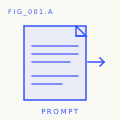 FIG_001 · A PROMPTS | 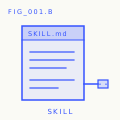 FIG_001 · B SKILLS | 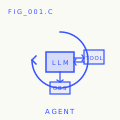 FIG_001 · C AGENTS | 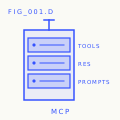 FIG_001 · D MCP SERVERS |
|---|---|---|---|
| Paste into any AI assistant for expert-level help on a narrow task. | Drop into Claude, Cursor, Codex, OpenClaw, Hermes, or any agent that reads SKILL.md. | Deploy as autonomous workers — you wrote the loop yourself in Phase 14. | Plug into any MCP-compatible client. Built end-to-end in Phase 13. |
Install the lot with
python3 scripts/install_skills.py. Real tools, not homework. By the end of the curriculum, you have a portfolio of 503 artifacts you actually understand because you built them.
FIG_002 · A worked sample
Phase 14, lesson 1: the agent loop. ~120 lines of pure Python, no dependencies.
|
|
|
░░░▒▒▒░░░▒▒▒░░░▒▒▒░░░▒▒▒░░░▒▒▒░░░▒▒▒░░░▒▒▒░░░▒▒▒░░░▒▒▒░░░▒▒▒░░░▒▒▒░░░▒▒▒░░░▒▒▒░░░▒▒▒░░░▒▒▒
Contents
Twenty phases. Click any phase to expand its lesson list.
Phase 0: Setup & Tooling 12 lessons
Get your environment ready for everything that follows.
| # | Lesson | Type | Lang |
|---|---|---|---|
| 01 | Dev Environment | Build | Python |
| 02 | Git & Collaboration | Learn | — |
| 03 | GPU Setup & Cloud | Build | Python |
| 04 | APIs & Keys | Build | Python |
| 05 | Jupyter Notebooks | Build | Python |
| 06 | Python Environments | Build | Shell |
| 07 | Docker for AI | Build | Docker |
| 08 | Editor Setup | Build | — |
| 09 | Data Management | Build | Python |
| 10 | Terminal & Shell | Learn | — |
| 11 | Linux for AI | Learn | — |
| 12 | Debugging & Profiling | Build | Python |
Phase 1 — Math Foundations 22 lessons The intuition behind every AI algorithm, through code.
| # | Lesson | Type | Lang |
|---|---|---|---|
| 01 | Linear Algebra Intuition | Learn | Python, Julia |
| 02 | Vectors, Matrices & Operations | Build | Python, Julia |
| 03 | Matrix Transformations & Eigenvalues | Build | Python, Julia |
| 04 | Calculus for ML: Derivatives & Gradients | Learn | Python |
| 05 | Chain Rule & Automatic Differentiation | Build | Python |
| 06 | Probability & Distributions | Learn | Python |
| 07 | Bayes' Theorem & Statistical Thinking | Build | Python |
| 08 | Optimization: Gradient Descent Family | Build | Python |
| 09 | Information Theory: Entropy, KL Divergence | Learn | Python |
| 10 | Dimensionality Reduction: PCA, t-SNE, UMAP | Build | Python |
| 11 | Singular Value Decomposition | Build | Python, Julia |
| 12 | Tensor Operations | Build | Python |
| 13 | Numerical Stability | Build | Python |
| 14 | Norms & Distances | Build | Python |
| 15 | Statistics for ML | Build | Python |
| 16 | Sampling Methods | Build | Python |
| 17 | Linear Systems | Build | Python |
| 18 | Convex Optimization | Build | Python |
| 19 | Complex Numbers for AI | Learn | Python |
| 20 | The Fourier Transform | Build | Python |
| 21 | Graph Theory for ML | Build | Python |
| 22 | Stochastic Processes | Learn | Python |
Phase 2 — ML Fundamentals 18 lessons Classical ML — still the backbone of most production AI.
| # | Lesson | Type | Lang |
|---|---|---|---|
| 01 | What Is Machine Learning | Learn | Python |
| 02 | Linear Regression from Scratch | Build | Python |
| 03 | Logistic Regression & Classification | Build | Python |
| 04 | Decision Trees & Random Forests | Build | Python |
| 05 | Support Vector Machines | Build | Python |
| 06 | KNN & Distance Metrics | Build | Python |
| 07 | Unsupervised Learning: K-Means, DBSCAN | Build | Python |
| 08 | Feature Engineering & Selection | Build | Python |
| 09 | Model Evaluation: Metrics, Cross-Validation | Build | Python |
| 10 | Bias, Variance & the Learning Curve | Learn | Python |
| 11 | Ensemble Methods: Boosting, Bagging, Stacking | Build | Python |
| 12 | Hyperparameter Tuning | Build | Python |
| 13 | ML Pipelines & Experiment Tracking | Build | Python |
| 14 | Naive Bayes | Build | Python |
| 15 | Time Series Fundamentals | Build | Python |
| 16 | Anomaly Detection | Build | Python |
| 17 | Handling Imbalanced Data | Build | Python |
| 18 | Feature Selection | Build | Python |
Phase 3 — Deep Learning Core 13 lessons Neural networks from first principles. No frameworks until you build one.
| # | Lesson | Type | Lang |
|---|---|---|---|
| 01 | The Perceptron: Where It All Started | Build | Python |
| 02 | Multi-Layer Networks & Forward Pass | Build | Python |
| 03 | Backpropagation from Scratch | Build | Python |
| 04 | Activation Functions: ReLU, Sigmoid, GELU & Why | Build | Python |
| 05 | Loss Functions: MSE, Cross-Entropy, Contrastive | Build | Python |
| 06 | Optimizers: SGD, Momentum, Adam, AdamW | Build | Python |
| 07 | Regularization: Dropout, Weight Decay, BatchNorm | Build | Python |
| 08 | Weight Initialization & Training Stability | Build | Python |
| 09 | Learning Rate Schedules & Warmup | Build | Python |
| 10 | Build Your Own Mini Framework | Build | Python |
| 11 | Introduction to PyTorch | Build | Python |
| 12 | Introduction to JAX | Build | Python |
| 13 | Debugging Neural Networks | Build | Python |
Phase 4 — Computer Vision 28 lessons From pixels to understanding — image, video, 3D, VLMs, and world models.
Phase 5 — NLP: Foundations to Advanced 29 lessons Language is the interface to intelligence.
Phase 6 — Speech & Audio 17 lessons Hear, understand, speak.
| # | Lesson | Type | Lang |
|---|---|---|---|
| 01 | Audio Fundamentals: Waveforms, Sampling, FFT | Learn | Python |
| 02 | Spectrograms, Mel Scale & Audio Features | Build | Python |
| 03 | Audio Classification | Build | Python |
| 04 | Speech Recognition (ASR) | Build | Python |
| 05 | Whisper: Architecture & Fine-Tuning | Build | Python |
| 06 | Speaker Recognition & Verification | Build | Python |
| 07 | Text-to-Speech (TTS) | Build | Python |
| 08 | Voice Cloning & Voice Conversion | Build | Python |
| 09 | Music Generation | Build | Python |
| 10 | Audio-Language Models | Build | Python |
| 11 | Real-Time Audio Processing | Build | Python |
| 12 | Build a Voice Assistant Pipeline | Build | Python |
| 13 | Neural Audio Codecs — EnCodec, SNAC, Mimi, DAC | Learn | Python |
| 14 | Voice Activity Detection & Turn-Taking | Build | Python |
| 15 | Streaming Speech-to-Speech — Moshi, Hibiki | Learn | Python |
| 16 | Voice Anti-Spoofing & Audio Watermarking | Build | Python |
| 17 | Audio Evaluation — WER, MOS, MMAU, Leaderboards | Learn | Python |
Phase 7 — Transformers Deep Dive 14 lessons The architecture that changed everything.
| # | Lesson | Type | Lang |
|---|---|---|---|
| 01 | Why Transformers: The Problems with RNNs | Learn | Python |
| 02 | Self-Attention from Scratch | Build | Python |
| 03 | Multi-Head Attention | Build | Python |
| 04 | Positional Encoding: Sinusoidal, RoPE, ALiBi | Build | Python |
| 05 | The Full Transformer: Encoder + Decoder | Build | Python |
| 06 | BERT — Masked Language Modeling | Build | Python |
| 07 | GPT — Causal Language Modeling | Build | Python |
| 08 | T5, BART — Encoder-Decoder Models | Learn | Python |
| 09 | Vision Transformers (ViT) | Build | Python |
| 10 | Audio Transformers — Whisper Architecture | Learn | Python |
| 11 | Mixture of Experts (MoE) | Build | Python |
| 12 | KV Cache, Flash Attention & Inference Optimization | Build | Python |
| 13 | Scaling Laws | Learn | Python |
| 14 | Build a Transformer from Scratch | Build | Python |
| 15 | Attention Variants — Sliding Window, Sparse, Differential | Build | Python |
| 16 | Speculative Decoding — Draft, Verify, Repeat | Build | Python |
Phase 8 — Generative AI 14 lessons Create images, video, audio, 3D, and more.
| # | Lesson | Type | Lang |
|---|---|---|---|
| 01 | Generative Models: Taxonomy & History | Learn | Python |
| 02 | Autoencoders & VAE | Build | Python |
| 03 | GANs: Generator vs Discriminator | Build | Python |
| 04 | Conditional GANs & Pix2Pix | Build | Python |
| 05 | StyleGAN | Build | Python |
| 06 | Diffusion Models — DDPM from Scratch | Build | Python |
| 07 | Latent Diffusion & Stable Diffusion | Build | Python |
| 08 | ControlNet, LoRA & Conditioning | Build | Python |
| 09 | Inpainting, Outpainting & Editing | Build | Python |
| 10 | Video Generation | Build | Python |
| 11 | Audio Generation | Build | Python |
| 12 | 3D Generation | Build | Python |
| 13 | Flow Matching & Rectified Flows | Build | Python |
| 14 | Evaluation: FID, CLIP Score | Build | Python |
| 19 | Visual Autoregressive Modeling (VAR): Next-Scale Prediction | Build | Python |
Phase 9 — Reinforcement Learning 12 lessons The foundation of RLHF and game-playing AI.
| # | Lesson | Type | Lang |
|---|---|---|---|
| 01 | MDPs, States, Actions & Rewards | Learn | Python |
| 02 | Dynamic Programming | Build | Python |
| 03 | Monte Carlo Methods | Build | Python |
| 04 | Q-Learning, SARSA | Build | Python |
| 05 | Deep Q-Networks (DQN) | Build | Python |
| 06 | Policy Gradients — REINFORCE | Build | Python |
| 07 | Actor-Critic — A2C, A3C | Build | Python |
| 08 | PPO | Build | Python |
| 09 | Reward Modeling & RLHF | Build | Python |
| 10 | Multi-Agent RL | Build | Python |
| 11 | Sim-to-Real Transfer | Build | Python |
| 12 | RL for Games | Build | Python |
Phase 10 — LLMs from Scratch 22 lessons Build, train, and understand large language models.
Phase 11 — LLM Engineering 17 lessons Put LLMs to work in production.
| # | Lesson | Type | Lang |
|---|---|---|---|
| 01 | Prompt Engineering: Techniques & Patterns | Build | Python |
| 02 | Few-Shot, CoT, Tree-of-Thought | Build | Python |
| 03 | Structured Outputs | Build | Python |
| 04 | Embeddings & Vector Representations | Build | Python |
| 05 | Context Engineering | Build | Python |
| 06 | RAG: Retrieval-Augmented Generation | Build | Python |
| 07 | Advanced RAG: Chunking, Reranking | Build | Python |
| 08 | Fine-Tuning with LoRA & QLoRA | Build | Python |
| 09 | Function Calling & Tool Use | Build | Python |
| 10 | Evaluation & Testing | Build | Python |
| 11 | Caching, Rate Limiting & Cost | Build | Python |
| 12 | Guardrails & Safety | Build | Python |
| 13 | Building a Production LLM App | Build | Python |
| 14 | Model Context Protocol (MCP) | Build | Python |
| 15 | Prompt Caching & Context Caching | Build | Python |
| 16 | LangGraph: State Machines for Agents | Build | Python |
| 17 | Agent Framework Tradeoffs | Learn | Python |
Phase 12 — Multimodal AI 25 lessons See, hear, read, and reason across modalities — from ViT patches to computer-use agents.
Phase 13 — Tools & Protocols 23 lessons The interfaces between AI and the real world.
| # | Lesson | Type | Lang |
|---|---|---|---|
| 01 | The Tool Interface | Learn | Python |
| 02 | Function Calling Deep Dive | Build | Python |
| 03 | Parallel and Streaming Tool Calls | Build | Python |
| 04 | Structured Output | Build | Python |
| 05 | Tool Schema Design | Learn | Python |
| 06 | MCP Fundamentals | Learn | Python |
| 07 | Building an MCP Server | Build | Python |
| 08 | Building an MCP Client | Build | Python |
| 09 | MCP Transports | Learn | Python |
| 10 | MCP Resources and Prompts | Build | Python |
| 11 | MCP Sampling | Build | Python |
| 12 | MCP Roots and Elicitation | Build | Python |
| 13 | MCP Async Tasks | Build | Python |
| 14 | MCP Apps | Build | Python |
| 15 | MCP Security I — Tool Poisoning | Learn | Python |
| 16 | MCP Security II — OAuth 2.1 | Build | Python |
| 17 | MCP Gateways and Registries | Learn | Python |
| 18 | MCP Auth in Production — Enrollment, JWKS Refresh, Audience Pinning | Build | Python |
| 19 | A2A Protocol | Build | Python |
| 20 | OpenTelemetry GenAI | Build | Python |
| 21 | LLM Routing Layer | Learn | Python |
| 22 | Skills and Agent SDKs | Learn | Python |
| 23 | Capstone — Tool Ecosystem | Build | Python |
Phase 14 — Agent Engineering 42 lessons Build agents from first principles — loop, memory, planning, frameworks, benchmarks, production, workbench.
Each Phase 14 workbench lesson (31-42) ships a mission.md briefing the agent before it opens the full lesson docs.
Phase 15 — Autonomous Systems 22 lessons Long-horizon agents, self-improvement, and the 2026 safety stack.
Phase 16 — Multi-Agent & Swarms 25 lessons Coordination, emergence, and collective intelligence.
Phase 17 — Infrastructure & Production 28 lessons Ship AI to the real world.
Phase 18 — Ethics, Safety & Alignment 30 lessons Build AI that helps humanity. Not optional.
Phase 19 — Capstone Projects 85 lessons 17 end-to-end products + 9 deep-build tracks. 20-40 hours per project; 4-12 lessons per track.
Deep-build tracks — multi-lesson series that build a complete subsystem from scratch.
░░░▒▒▒░░░▒▒▒░░░▒▒▒░░░▒▒▒░░░▒▒▒░░░▒▒▒░░░▒▒▒░░░▒▒▒░░░▒▒▒░░░▒▒▒░░░▒▒▒░░░▒▒▒░░░▒▒▒░░░▒▒▒░░░▒▒▒
The toolkit
Every lesson produces a reusable artifact. By the end you have:
outputs/
├── prompts/      prompt templates for every AI task
└── skills/       SKILL.md files for AI coding agents
Install them with npx skills add. Plug them into Claude, Cursor, Codex,
OpenClaw, Hermes, or any agent that reads a SKILL.md / AGENTS.md directory.
Real tools, not homework.
Install every course skill into your agent
The repo ships 388 skills and 99 prompts under phases/**/outputs/.
Recommended: install via skills.sh. No clone, no Python, detects your agent's skills directory automatically:
npx skills add rohitg00/ai-engineering-from-scratch                       # every skill
npx skills add rohitg00/ai-engineering-from-scratch --skill agent-loop    # one skill
npx skills add rohitg00/ai-engineering-from-scratch --phase 14            # one phase
skills writes to whichever directory your agent picks up: .claude/skills/,
.cursor/skills/, .codex/skills/, OpenClaw's skills folder, Hermes's bundle
path, or any SKILL.md-aware tool. One command, every agent.
Advanced: offline / custom layout via scripts/install_skills.py. Requires
cloning the repo. Useful when you need tag filters, dry-runs, or a non-default
layout:
python3 scripts/install_skills.py <target>                                 # every skill, default --layout skills (nested)
python3 scripts/install_skills.py <target> --layout skills                 # same as above, explicit
python3 scripts/install_skills.py <target> --type all                      # skills + prompts + agents
python3 scripts/install_skills.py <target> --phase 14                      # one phase only
python3 scripts/install_skills.py <target> --tag rag                       # filter by tag
python3 scripts/install_skills.py <target> --layout flat                   # flat files
python3 scripts/install_skills.py <target> --dry-run                       # preview without writing
python3 scripts/install_skills.py <target> --force                         # overwrite existing files
<target> is the skills directory for your agent (examples:
~/.claude/skills/, ~/.cursor/skills/, ~/.config/openclaw/skills/,
.skills/, or any path your agent reads).
By default the script refuses to overwrite an existing destination and exits
with code 1 after listing every colliding path. Use --dry-run to preview
collisions or --force to overwrite. Every non-dry-run run writes a
manifest.json in the target with the full inventory grouped by type and
phase. Pick the layout your agent reads:
--layout | Path written |
|---|---|
skills | <target>/<name>/SKILL.md (nested convention, supported by Claude / Cursor / Codex / OpenClaw / Hermes) |
by-phase | <target>/phase-NN/<name>.md |
flat | <target>/<name>.md |
Drop the agent workbench into your own repo
The Phase 14 capstone ships a reusable Agent Workbench pack (AGENTS.md, schemas, init / verify / handoff scripts). Scaffold it into any repo with:
python3 scripts/scaffold_workbench.py path/to/your-repo            # full pack + seeds
python3 scripts/scaffold_workbench.py path/to/your-repo --minimal  # skip docs/
python3 scripts/scaffold_workbench.py path/to/your-repo --dry-run  # preview only
python3 scripts/scaffold_workbench.py path/to/your-repo --force    # overwrite
You get the seven workbench surfaces wired up, a starter task_board.json,
and a fresh agent_state.json at schema_version: 1. From there: edit the
task, edit AGENTS.md, run scripts/init_agent.py, hand the contract to
your agent. The pack source lives at
phases/14-agent-engineering/42-agent-workbench-capstone/outputs/agent-workbench-pack/.
Browse the entire course as JSON
scripts/build_catalog.py walks every phase, every lesson, every artifact on
disk and writes catalog.json at the repo root. One file, every course truth.
python3 scripts/build_catalog.py               # writes <repo>/catalog.json
python3 scripts/build_catalog.py --stdout      # to stdout, do not touch repo
python3 scripts/build_catalog.py --out path/to/file.json
The catalog is filesystem-derived, not README-derived, so counts always match what is actually on disk. Use it for site builds, downstream tooling, or to verify the README counts have not drifted. Schema is documented at the top of the script.
A GitHub Action (.github/workflows/curriculum.yml) rebuilds catalog.json
on every PR and fails the build if the committed file is stale. After editing
any lesson, run python3 scripts/build_catalog.py and commit the result, or
CI will reject the PR. The same workflow runs audit_lessons.py in
warn-only mode (so existing drift does not block contributors).
Smoke-check every lesson's Python code
scripts/lesson_run.py byte-compiles every .py file under each lesson's
code/ directory. Default mode is syntax-check only — no execution, no API
keys, no heavy ML deps required. Catches the regressions contributors
introduce most often (bad indentation, broken f-strings, stray edits).
python3 scripts/lesson_run.py                  # syntax-check the whole curriculum
python3 scripts/lesson_run.py --phase 14       # one phase only
python3 scripts/lesson_run.py --json           # JSON report on stdout
python3 scripts/lesson_run.py --strict         # exit 1 if any lesson fails
python3 scripts/lesson_run.py --execute        # actually run, 10s timeout per lesson
--execute runs each lesson's code/main.py (or the first .py file) with a
10-second timeout. Lessons whose entry file starts with a # requires: pkg1, pkg2 comment listing non-stdlib deps are skipped with reason needs <deps>.
The script is opt-in and not wired into CI.
Stdlib only, Python 3.10+. Set LINK_CHECK_SKIP=domain1,domain2 to override
the default skip-list (twitter.com, x.com, linkedin.com,
instagram.com, medium.com — domains that aggressively block automated
HEAD/GET).
Where to start
| Background | Start at | Estimated time |
|---|---|---|
| New to programming and AI | Phase 0 — Setup | ~306 hours |
| Know Python, new to ML | Phase 1 — Math Foundations | ~270 hours |
| Know ML, new to deep learning | Phase 3 — Deep Learning Core | ~200 hours |
| Know deep learning, want LLMs and agents | Phase 10 — LLMs from Scratch | ~100 hours |
| Senior engineer, only want agent engineering | Phase 14 — Agent Engineering | ~60 hours |
░░░▒▒▒░░░▒▒▒░░░▒▒▒░░░▒▒▒░░░▒▒▒░░░▒▒▒░░░▒▒▒░░░▒▒▒░░░▒▒▒░░░▒▒▒░░░▒▒▒░░░▒▒▒░░░▒▒▒░░░▒▒▒░░░▒▒▒
Why this matters now
| FIG_003 · A THE INDUSTRY SIGNAL | FIG_003 · B FOUNDATIONAL PAPERS COVERED |
|---|---|
|
|
░░░▒▒▒░░░▒▒▒░░░▒▒▒░░░▒▒▒░░░▒▒▒░░░▒▒▒░░░▒▒▒░░░▒▒▒░░░▒▒▒░░░▒▒▒░░░▒▒▒░░░▒▒▒░░░▒▒▒░░░▒▒▒░░░▒▒▒
Contributing
| Goal | Read |
|---|---|
| Contribute a lesson or fix | CONTRIBUTING.md |
| Fork for your team or school | FORKING.md |
| Lesson template | LESSON_TEMPLATE.md |
| Track progress | ROADMAP.md |
| Glossary | glossary/terms.md |
| Code of conduct | CODE_OF_CONDUCT.md |
Before submitting a lesson, run the invariant check:
python3 scripts/audit_lessons.py           # full curriculum
python3 scripts/audit_lessons.py --phase 14  # single phase
python3 scripts/audit_lessons.py --json    # CI-friendly output
Exit code is non-zero when any rule fails. Rules (L001–L010) validate directory
shape, docs/en.md presence + H1, code/ non-emptiness, quiz.json schema
(rejects the legacy q/choices/answer keys that caused issue #102), and
relative links inside lesson docs.
░░░▒▒▒░░░▒▒▒░░░▒▒▒░░░▒▒▒░░░▒▒▒░░░▒▒▒░░░▒▒▒░░░▒▒▒░░░▒▒▒░░░▒▒▒░░░▒▒▒░░░▒▒▒░░░▒▒▒░░░▒▒▒░░░▒▒▒
Sponsor the work
Free, MIT-licensed, 503 lessons. The curriculum is maintained on sponsorship alone. Cash only.
Reach (verified 2026-05-14): 55,593 monthly visitors · 90,709 page views · 7.5K stars · Twitter/X is the #1 acquisition channel.
Current sponsors: CodeRabbit · iii
| Tier | $/mo | What you get |
|---|---|---|
| Backer | $25 | Name in BACKERS.md |
| Bronze | $250 | Text-only row in README sponsor block + launch-day tweet |
| Silver | $750 | Small logo in README + listed as one supported provider in API lessons |
| Gold | $2,000 | Medium logo in README + sponsor page + quarterly X / LinkedIn co-feature |
| Platinum | $5,000 | Hero logo above the fold + one dedicated integration lesson, max 1 partner |
Full rate card, hard rules, pricing anchors, and reach data: SPONSORS.md. Sign up via GitHub Sponsors.
░░░▒▒▒░░░▒▒▒░░░▒▒▒░░░▒▒▒░░░▒▒▒░░░▒▒▒░░░▒▒▒░░░▒▒▒░░░▒▒▒░░░▒▒▒░░░▒▒▒░░░▒▒▒░░░▒▒▒░░░▒▒▒░░░▒▒▒
Star history
If this manual helped you, star the repo. It keeps the project alive.
License
MIT. Use it however you want — fork it, teach it, sell it, ship it. Attribution appreciated, not required.
Maintained by Rohit Ghumare and the community.
@ghumare64 · aiengineeringfromscratch.com · Report / SuggestDiscover Repositories
Search across tracked repositories by name or description