
nektos/act
Run your GitHub Actions locally 🚀
Build with Backblaze B2
SDKs, agent skills, IDE extensions, and reference pipelines from Backblaze Labs. All open source.
Loading star history...
Use Cases & Benefits
- Runs GitHub Actions workflows locally using Docker to simulate GitHub's environment and filesystem.
- Provides fast feedback by allowing developers to test and debug GitHub Actions without pushing commits.
- Use for speeding up CI/CD workflow development by running and iterating on GitHub Actions locally.
- Use for replacing Makefiles by leveraging existing GitHub Actions as local task runners.
- Use for integrating local GitHub Actions testing directly within VS Code via compatible extensions.
About act

Overview 


"Think globally,
actlocally"
Run your GitHub Actions locally! Why would you want to do this? Two reasons:
- Fast Feedback - Rather than having to commit/push every time you want to test out the changes you are making to your
.github/workflows/files (or for any changes to embedded GitHub actions), you can useactto run the actions locally. The environment variables and filesystem are all configured to match what GitHub provides. - Local Task Runner - I love make. However, I also hate repeating myself. With
act, you can use the GitHub Actions defined in your.github/workflows/to replace yourMakefile!
[!TIP] Now Manage and Run Act Directly From VS Code!
Check out the GitHub Local Actions Visual Studio Code extension which allows you to leverage the power ofactto run and test workflows locally without leaving your editor.
How Does It Work?
When you run act it reads in your GitHub Actions from .github/workflows/ and determines the set of actions that need to be run. It uses the Docker API to either pull or build the necessary images, as defined in your workflow files and finally determines the execution path based on the dependencies that were defined. Once it has the execution path, it then uses the Docker API to run containers for each action based on the images prepared earlier. The environment variables and filesystem are all configured to match what GitHub provides.
Let's see it in action with a sample repo!
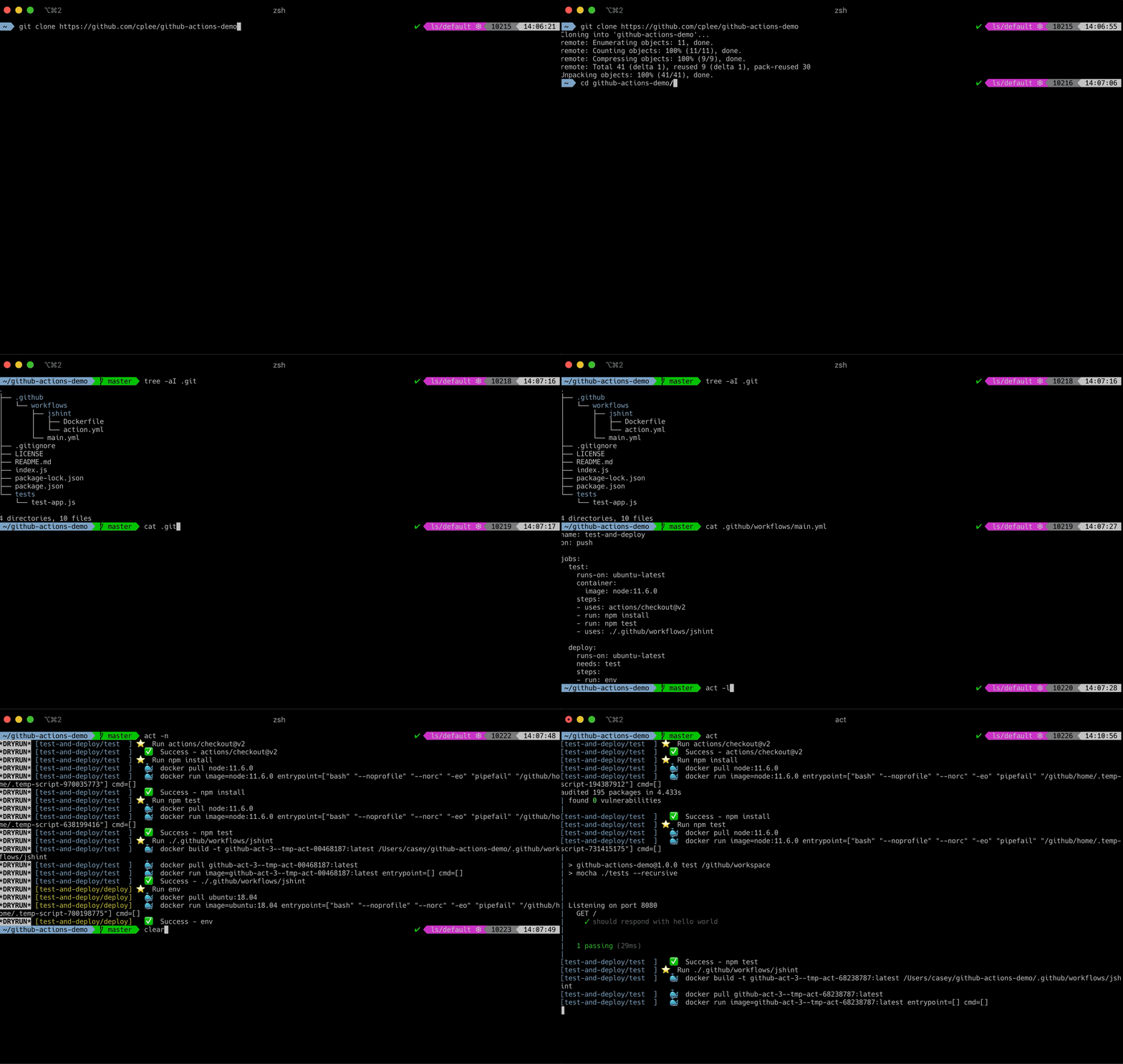
Act User Guide
Please look at the act user guide for more documentation.
Support
Need help? Ask in discussions!
Contributing
Want to contribute to act? Awesome! Check out the contributing guidelines to get involved.
Manually building from source
- Install Go tools 1.20+ - (https://golang.org/doc/install)
- Clone this repo
git clone [email protected]:nektos/act.git - Run unit tests with
make test - Build and install:
make install
Discover Repositories
Search across tracked repositories by name or description