
bee-san/RustScan
🤖 The Modern Port Scanner 🤖
Backblaze Generative Media Hackathon
Build the next generation of AI media apps with Genblaze, stored on Backblaze B2. $10,000 in prizes.
Loading star history...
Use Cases & Benefits
- Scans network ports rapidly and efficiently using Rust with support for scripting and adaptive learning.
- Delivers extremely fast port scanning speeds with extensible scripting and adaptive tuning to optimize scans over time.
- Use for quickly identifying open ports on large networks during penetration testing or security audits.
- Use for automating post-scan tasks by piping results into tools like Nmap or custom scripts in Python, Lua, or Shell.
- Ideal for security professionals seeking an accessible, continuously improving port scanner that integrates with existing workflows.
About RustScan







🤔 What is this?
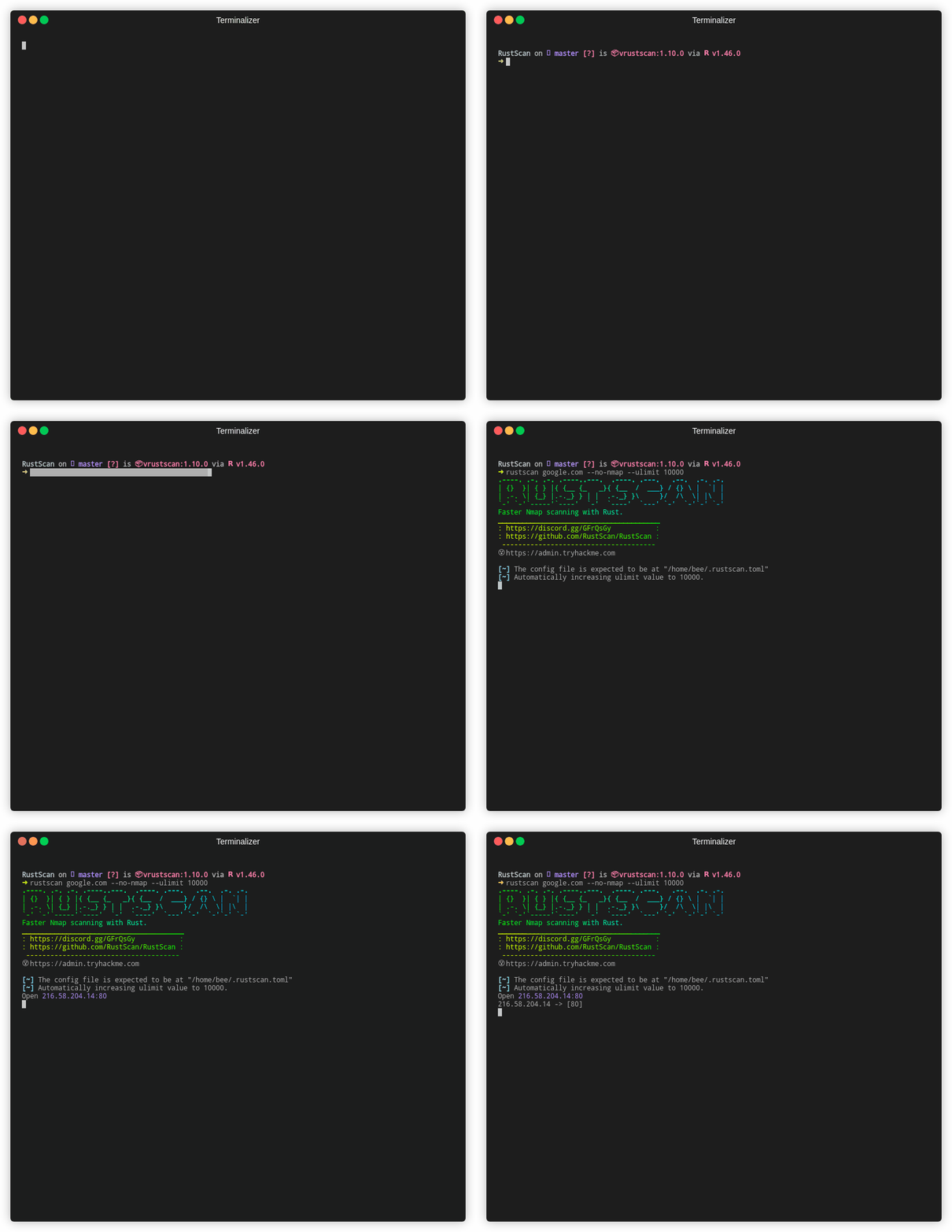
The Modern Port Scanner. Find ports quickly (3 seconds at its fastest). Run scripts through our scripting engine (Python, Lua, Shell supported).
🛠️ Installation
You can install RustScan's binary from our releases page.
We would prefer you to install with a package manager so it is tested and works for your system.
RustScan is in many repositories already. Install it with whatever tools you wish:

RustScan only officially supports Cargo installations, if you want to use that please install Rust and then cargo install rustscan
Example installations include:
MacOS:
brew install rustscan
Arch:
yay rustscan
✨ Features
- Scans all 65k ports in 3 seconds.
- Full scripting engine support. Automatically pipe results into Nmap, or use our scripts (or write your own) to do whatever you want.
- Adaptive learning. RustScan improves the more you use it. No bloated machine learning here, just basic maths.
- The usuals you would expect. IPv6, CIDR, file input and more.
- Automatically pipes ports into Nmap.
‼️ Important Links
| :book: Installation Guide | :books: Documentation | :parrot: Discord |
🙋 Table of Contents
- 📖 Installation Guide
- 🐋 Docker Usage
- 🦜 Discord
- 🤸 Usage
🔭 Why RustScan?
RustScan is a modern take on the port scanner. Sleek & fast. All while providing extensive extendability to you.
Not to mention RustScan uses Adaptive Learning to improve itself over time, making it the best port scanner for you.
🧋 Speed
Speed is guaranteed via RustScan. However, if you want to run a slow scan due to stealth, that is possible too.
Firstly, let's talk code.
We have tests that check to see if RustScan is significantly slower than the previous version. If it is, the continuous integration fails, and we can't commit code to master unless we make it faster.
HyperFine is used to monitor RustScan's performance over time to answer the question, "Are we getting faster? Are we getting slower?".
Every pull request is reviewed by one person, but more often than not, two people review it. We test it manually and ensure the code doesn't negatively affect performance.
⚙️ Extensible
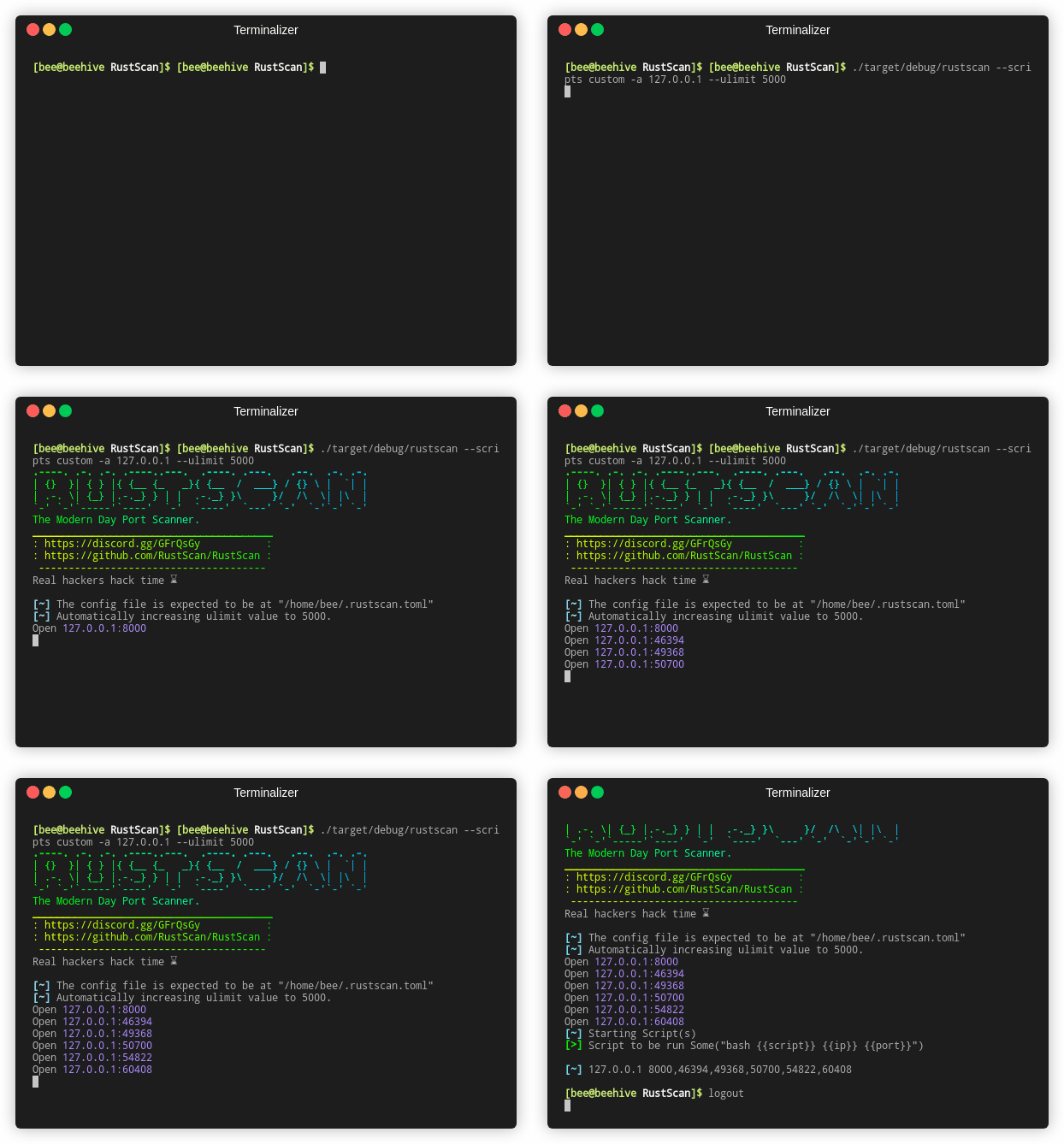
RustScan piping results into the custom Python script
RustScan has a new scripting engine that allows anyone to write scripts in most languages. Python, Lua, and Shell are all supported.
Want to take your found ports and pipe them into Nmap for further analysis? That's possible. Want to run smb-enum if SMB is found open? Possible.
The possibilities are endless -- and you can write scripts in whatever language you feel comfortable with.
🌊 Adaptive
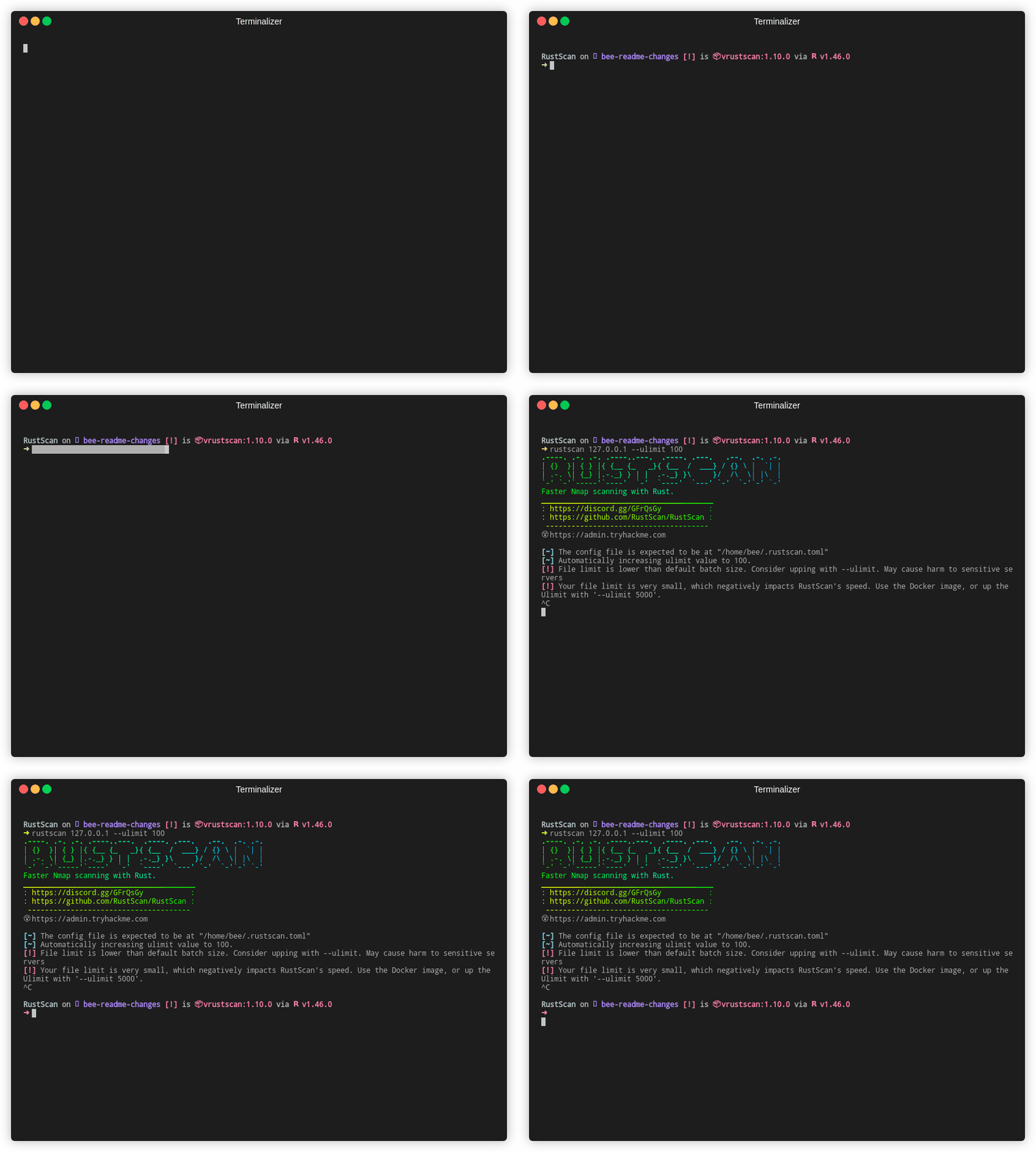
RustScan automatically fine-tunes itself to match the host OS
RustScan has a cool set of features called "Adaptive Learning". These features "learn" about the environment you are scanning and how you use RustScan to improve itself over time.
We use this umbrella term for any feature that fits this criterion. The list constantly changes, so check out our wiki for more information.
👩🦯 Accessible
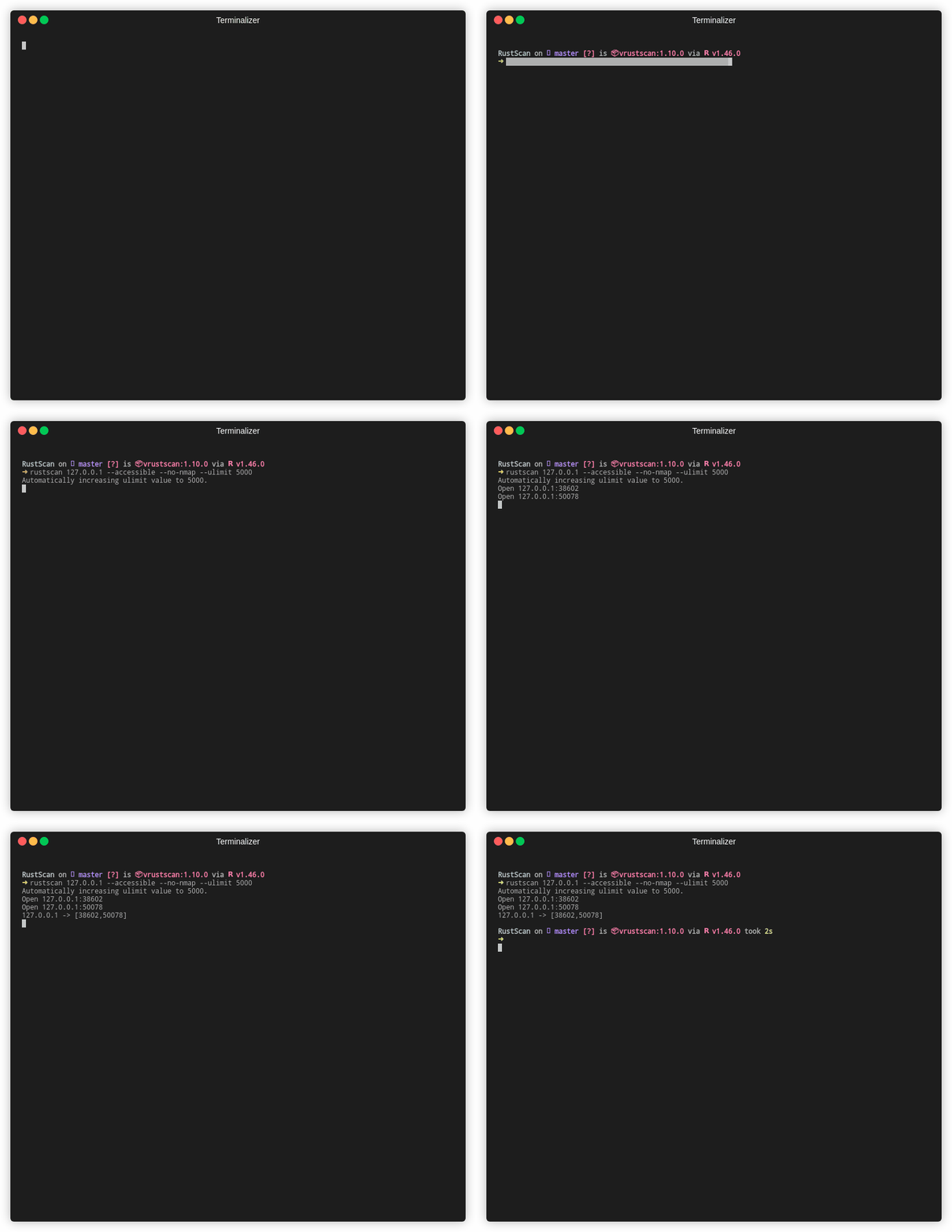
RustScan is one of the first penetration testing tools that aims to be entirely accessible.
Most penetration testing tools are not accessible, which negatively affects the whole industry.
RustScan has continuous integration testing that aims to ensure it is accessible, and we are constantly working on ways to improve our accessibility and ensure everyone can use RustScan.
🤸 Usage
We have 2 usage guides. Basic Usage and Things you may want to do.
We also have documentation about our config file here.
🎪 Community
Contributing Read this to learn how.
Contributors ✨

Thanks goes to these wonderful people (emoji key):


This project follows the all-contributors specification. Contributions of any kind welcome!
Discover Repositories
Search across tracked repositories by name or description