
anthropics/claude-code
Claude Code is an agentic coding tool that lives in your terminal, understands your codebase, and helps you code faster by executing routine tasks, explaining complex code, and handling git workflows - all through natural language commands.
Build with Backblaze B2
SDKs, agent skills, IDE extensions, and reference pipelines from Backblaze Labs. All open source.
Loading star history...
Use Cases & Benefits
- Provides an AI-powered terminal tool that understands your codebase and executes coding tasks via natural language commands.
- Enables faster coding by automating routine tasks, explaining complex code, and managing git workflows without leaving the terminal.
- Use for accelerating development by automating repetitive coding and git operations directly from the command line.
- Use for gaining quick explanations of unfamiliar or complex code sections to improve code comprehension.
- Use for integrating AI-assisted coding workflows seamlessly into IDEs or GitHub by tagging @claude for contextual help.
About claude-code
Claude Code


Claude Code is an agentic coding tool that lives in your terminal, understands your codebase, and helps you code faster by executing routine tasks, explaining complex code, and handling git workflows -- all through natural language commands. Use it in your terminal, IDE, or tag @claude on Github.
Learn more in the official documentation.
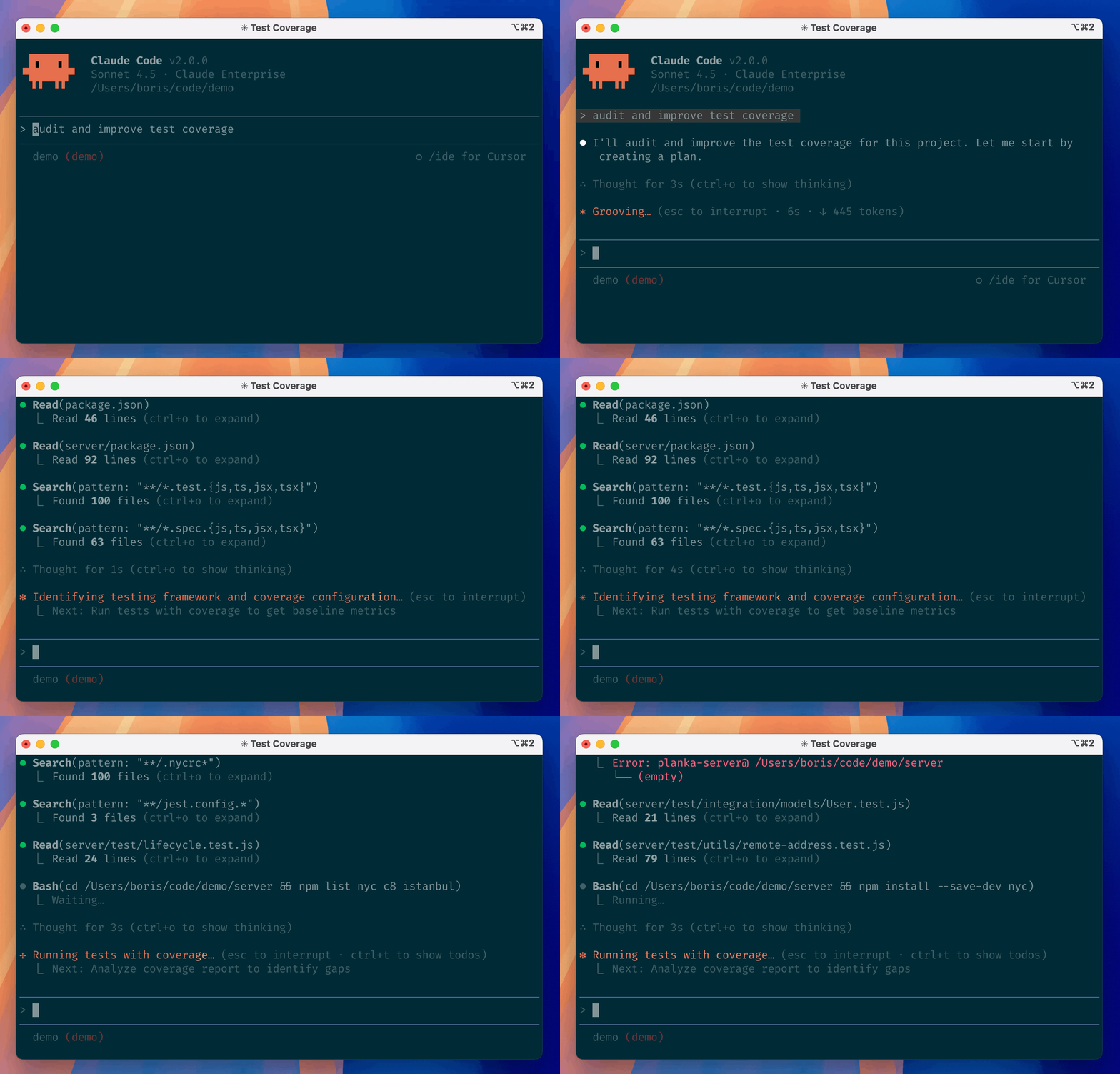
Get started
- Install Claude Code:
npm install -g @anthropic-ai/claude-code
- Navigate to your project directory and run
claude.
Reporting Bugs
We welcome your feedback. Use the /bug command to report issues directly within Claude Code, or file a GitHub issue.
Connect on Discord
Join the Claude Developers Discord to connect with other developers using Claude Code. Get help, share feedback, and discuss your projects with the community.
Data collection, usage, and retention
When you use Claude Code, we collect feedback, which includes usage data (such as code acceptance or rejections), associated conversation data, and user feedback submitted via the /bug command.
How we use your data
See our data usage policies.
Privacy safeguards
We have implemented several safeguards to protect your data, including limited retention periods for sensitive information, restricted access to user session data, and clear policies against using feedback for model training.
For full details, please review our Commercial Terms of Service and Privacy Policy.
Discover Repositories
Search across tracked repositories by name or description